Nesodden
The SonNesodden is both a real peninsula across the fjord from Oslo and a landscape of remembered possibility for Martha. When she brings Stig to the childhood retreat she calls “Little Berlin,” the setting opens onto the artists’ communal life she grew up among, the deaths that made her responsible for her sister, and a dream of Berlin that distance and poverty kept unresolved.
Setting and Approach
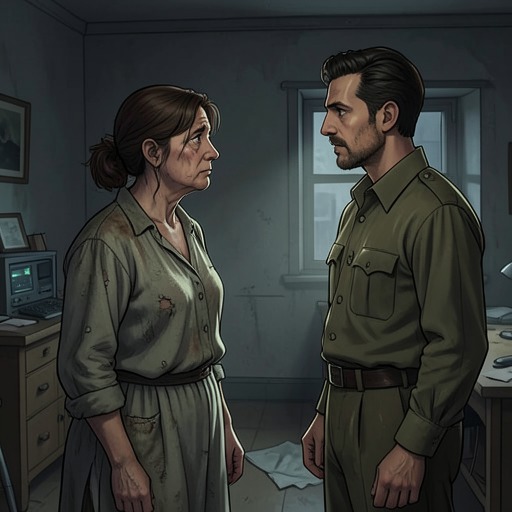
After travelling along the motorway, Martha turns towards Nesoddtangen, where the roads narrow and traffic thins. Later, she leads Stig to the tip of Nesodden by way of a gravel track, parking behind low houses whose small rear windows contrast with large windows facing the sea. The transition from motorway to quieter roads, then from parked car to footpath through tall grass, makes their arrival a gradual retreat from the ordinary route into a place marked by Martha’s personal history.
The cottages are renovated holiday homes dating from the 1950s. Martha says she grew up in one, and identifies the rocky point below as the pair’s secret sunspot. The houses’ sea-facing aspect and the path down to the point connect domestic shelter with open water: this is a childhood home remembered through both its enclosed rooms and the view beyond them. At the point, Martha sits and breathes the salty air while children splash nearby, a present-day scene of leisure surrounding the memory she is about to tell.
“Little Berlin”
Martha explains that her parents and their friends called Nesodden “Little Berlin” because artists had settled there. Living in a draughty cottage was cheaper than living in Oslo, and the relative poverty of the community shaped its habits. When temperatures fell well below freezing, people gathered in whichever house was least cold; Martha’s was often the chosen refuge. With too few mattresses for everyone, they stayed awake drinking red wine until morning and then ate a large communal breakfast together.
The warmth of this arrangement is not presented as proof that the community was idyllic. Martha recalls that people looked out for one another, but also that they argued over money, criticised each other’s art, and slept with one another’s spouses. The place was alive and exciting precisely without being harmonious. Its shared meals and crowded nights describe a practical solidarity formed under material constraints, while the quarrels and infidelities resist turning childhood nostalgia into an uncomplicated portrait of communal life.
The Berlin They Imagined
As children, Martha and her sister believed they lived in Berlin. Their father eventually showed Martha on a map where the actual city was, explaining that it lay more than a thousand kilometres away. He promised that one day the family would drive there, visit the Brandenburg Gate and Charlottenburg Palace, and let the girls imagine themselves as princesses. For the children, the name “Little Berlin” thus became more than a local nickname: it joined their immediate home to a distant city made vivid by a parent’s promise.
Martha never reached the real Berlin with her parents. They had little money and died when she was still young; she was eighteen when they died, and afterwards had to look after her sister. The planned journey belongs to a future that the family could not fulfil, while the childhood story survives in Martha’s present conversation with Stig. She says she has always dreamed of Berlin, to the point that she is no longer sure whether it really exists. That uncertainty gives the remembered geography an emotional double edge: Berlin is a place located on a map, but also an imagined destination whose reality has been blurred by distance, deprivation, and loss.
Narrative Significance
Nesodden’s significance lies in the way it holds several scales of distance together. From the rocky point, Oslo appears on a clear day as though it were only a few hundred metres away, yet the actual distance is five kilometres. The ferry travels north to the capital, and many commuters prefer it to driving forty-five kilometres around the fjord. The visible city, the measured crossing, and the longer road journey make the peninsula feel close to Oslo and separate from it at once.
Martha’s account gives that physical geography a personal chronology. A present-day visit with Stig becomes the occasion for recalling the cottage, her parents’ artistic circle, her father’s map, and the future trip that never happened. “Little Berlin” names a community built out of improvisation and mutual presence, but it also carries the absence of the people who made it home. The place is neither merely a scenic refuge nor simply a lost childhood setting: it is where Martha’s memories of belonging and her awareness of what was denied remain side by side.